
Register HERE for this online session.
America’s public schools are coming under unusually strong attention from the general public — scrutiny communities typically rely on journalists to provide.
The issues are as disparate as masking mandates and COVID-19 testing; decisions around the spending of federal pandemic relief funds; the pros and cons of virtual vs. in-person learning; gun threats; and a rising trend of lawmakers and parents’ demanding that schoolchildren not be taught certain subjects such as human sexuality and the history of racism.
Journalists face multiple barriers, many government- or district-imposed, to covering these complex topics. Practices like filtering all interviews through public information officers seriously impairs journalists’ ability to cover these weighty subjects, while prohibiting teachers, school staff and other key education officials from sharing their stories. Add in policies that limit access to key education-related data-sets, and answering the public’s questions in a timely, thoughtful, and detailed manner becomes exceedingly difficult.
In honor of Sunshine Week, expert panelists will explore the impact of these government restrictions on press coverage of public schools and how to work around them. Produced by the Society of Professional Journalists and the National Press Club Journalism Institute, the discussion will offer strategies and tools to overcome these barriers.
Panelists include:
– Eva-Marie Ayala, Education Lab editor for The Dallas Morning News
– Frank LoMonte, professor at the University of Florida and counsel at CNN
– Randi Weingarten, president of the American Federation of Teachers, AFL-CIO
– Moderator: Delece Smith-Barrow, education editor at POLITICO
Tickets
The Summit itself is free to attend and largely virtual.
The Hollywood Creative Lab is virtual and free to attend.
Tickets are needed to watch whistlebower-related films, which are shown daily
TICKET AVAILABLE: Click HERE
Overall website
Partial Schedule
Monday July 25
9:00 Plenary: Frank Serpico, former New York City detective
10:00 Continued systemic discrimination at U.S. Department of Agriculture
11:00 Congressional year of truth for whistleblower legislation (Government Accountability Project)
12:00 The perils of public information officers (Society of Professional Journalists – DC Chapter)
1:00 Global guardianship abuse
Tuesday July 26
9:00 Government whistleblowing, scientific integrity and the environment (PEER — Public Employees for Environmental Responsibility)
10:00 The EEOC needs Rehabilitation
11:00 Working with the Office of Special Council (Government Accountability Project)
12:00 Guilty of journalism: The political case against Julian Assange (Project Censored)
1:00 Righting the wrongs of a ‘shadow government’ (Justice Integrity Project)
Wednesday July 27
9:00 Hollywood Pitch Lab (Day 1)
10:00 Screenplay contest announcement
Thursday July 28
9:00 Hollywood Pitch Lab (Day 2)
10:00 Breakout sessions
Friday July 29 – being held on Capitol Hill
9:00 Closing Plenary
10:00 Hollywood creative lab pitch contest (online)
10:00 Martha Mitchell in memoriam
11:00 Detailing the whistleblower story on film (African American Women in Cinema)
12:00 Working more effectively with Congress (Government Accountability Project)
Apply HERE.
Report for America (RFA) helps local newsrooms report on under-covered issues and communities by sending early-career and mid-to-late-career reporters and photographers to newsrooms throughout the country. As an RFA Corps Member, you’ll be a part of a movement to strengthen communities—and our democracy—through local journalism that is truthful, fair, fearless, and smart.
RFA is a two-year program, with an optional third year. Each service year begins on July 10 and runs through July 9. We currently have 300 reporters and photographers in 200 newsrooms serving communities across the country. We are seeking talented, service-minded journalists and photographers to join our reporting corps. Applications are now open for 55+ journalism positions. Check out our interactive database of job openings, newsrooms, and beats here and read the FAQs to make sure you are a good fit for our program. Because of the immediate impact candidates are expected to have in newsroom settings, corps member applicants should have a minimum of 1-3 years of local news experience. Recent graduates may apply if they’ve had local newsroom internships or journalism leadership experience in college.
Report for America is committed to equity, diversity and inclusion in the workplace.
Apply HERE.
The Global Investigative Journalism Conference (GIJC) is the premier international gathering of investigative and data journalists, held once every two years. In 2023, the conference will be held in Gothenburg, Sweden, from September 19 to 22, and is being co-hosted by GIJN, the Fojo Media Institute at Linnaeus University, and Föreningen Grävande Journalister, Sweden’s national association of investigative journalists. The conference venue is the world-class Swedish Exhibition & Congress Centre.
GIJC23 will feature over 150 state-of-the-art panels, workshops, and networking sessions, from cross-border collaboration and online searching to advanced data analysis. You’ll find special tracks on climate change, the threat to democracy, data journalism, crime and corruption, teaching and training, and sustainability strategies — plus the latest security tips and a chance to network and collaborate with your colleagues from 100 countries. Here’s where you can learn from the best in the field and return home with sharpened skills and the latest tools and techniques.
With the support of our sponsors and partners, the conference is offering more than 150 fellowships to both established and promising journalists in developing and transitioning countries, and for journalists from disenfranchised communities, to participate in this prestigious event. Competition is keen, so you need to convince us that you will make great use of the training that GIJC23 offers.
Eligibility Criteria
- Open to full-time print, online, television, video, radio, documentary, and multimedia journalists in developing or transitioning countries;
- Experience in investigative or data journalism a plus;
- Sorry, Western journalists based overseas are not eligible. For a full list of eligible countries, please check out this link.
Fellowship Requirement
Following the conference, fellows are required to either produce a story directly related to #GIJC23 or give a presentation based on the knowledge you gained at #GIJC23 to your colleagues or the journalism community at-large. Detailed guidelines and examples here.
You’ll need a working knowledge of English, as the conference panels and workshops will be conducted in English. Please submit your fellowship application in English.
GIJC23 Fellowship Includes
- Round-trip airfare to Gothenburg, Sweden
- Hotel room for four nights
- Transport between Gothenburg-Landvetter Airport and the conference hotel
- Reception dinner
- Breakfast and lunch on conference days
- Award ceremony dinner
- Conference registration fee
NOTE: The fellowship does not include a per diem, visa fees, or transport to and from your home country airport. This is a training conference, and fellows are expected to pay for these costs.
APPLICATION DEADLINE: February 28, 2023. Successful fellows will be notified via email by May 1, 2023.
Offered by New England First Amendment Coalition
The NEFC provides reporters, watchdogs and other curious community members the knowledge they can use immediately in news gathering, data collection, storytelling and other areas of journalism and First Amendment law.
The lessons are provided in a 30-minute format to accommodate the demanding schedules faced by many working in New England newsrooms. The program is free and open to the public.
Registration for each lesson is required.
Immigration Reporting 101 session led by Giulia McDonnell Nieto del Rio
The Boston Globe
Current times mean many of our sources may fear repercussions ranging from deportation to court action to violence. How can journalists protect sensitive sources? Erica Hellerstein developed a policy to protect immigrant sources for El Timpano in the San Francisco Bay Area. Kae Petrin co-founded the Trans Journalists Association and is board president for the organization. Margaux Ewen is director of whistleblower protection at The Signals Network, which works with journalists and sources. They’ll share examples and suggest ways to work with sources while minimizing harm.
Registration is required to attend the free Zoom webinar on Wednesday, January 14 at 12 p.m. ET.
ABOUT THE PANELISTS:
- Margaux Ewen is the director of The Signals Network’s Whistleblower Protection Program. Margaux was most recently the director of Freedom House’s Fred Hiatt Program to Free Political Prisoners, a major project to support journalists, human rights defenders and pro-democracy activists who are detained in retaliation for their heroic work.
- Erica Hellerstein is senior immigration, labor and economics reporter for El Tímpano in the San Francisco Bay area. She is an award-winning journalist with more than a decade of experience reporting on global human rights issues. She’s reported from Africa, Latin America, Europe and across the United States while writing about politics, gender, labor, historical memory and the ways geographies real and constructed shape popular opinion and culture.
- Kae Petrin is president of the Trans Journalists Association board, after co-founding the organization in 2020. They are on leave from their full-time job as a data and graphics reporter at Civic News Company for a 2025-26 John S. Knight fellowship at Stanford, exploring ways to improve coverage of trans communities and retention of trans journalists.
The most consequential midterm election stories — who is organizing, how money and messaging are taking shape, and which issues are reshaping voter priorities — are already unfolding, long before the first votes are cast.
Join the National Press Club Journalism Institute and OpenSecrets for a free webinar that will prepare journalists to cover the midterms with financial data top of mind. This interactive session will focus on OpenSecrets’ campaign finance tools that can support your local and regional political reporting in 2026 and beyond.
OpenSecrets launched in 2021 following a merger between the National Institute on Money in Politics and the Center for Responsive Politics, which expanded users’ access to a vast collection of campaign finance data on state and local races, as well as lobbying data.
During this one-hour, virtual session, participants will learn:
– How to find, download, and incorporate public data into their elections-focused storytelling on deadline;
– How to explore Open Secrets’ “Get Local!” donations tracker and other reliable tools; and
– Strategies to strengthen their midterms coverage in 2026 through accountability journalism.
In the spirit of transparency, this session is also open to interested members of the public.
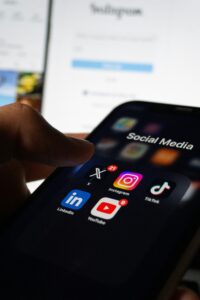
Journalists today aren’t just reporting the news — they’re becoming their own social media managers. As more people turn to social platforms as their primary news source, knowing how to promote your work strategically and thoughtfully has become a core journalism skill. Not a bonus one.
Kassy Cho, editor-in-chief of Almost, will lead this virtual workshop and share best practices for sharing your reporting on different platforms like Instagram and TikTok. That’ll include how to draw people in, visuals 101 and tips for defining goals.
This SPJ DC–requested workshop is designed to help reporters meet audiences where they already are. Bring your breakfast and questions for this early-morning session!
Register for the Zoom session here.
Editor-in-Chief of Almost, Kassy leads an independent media platform delivering social-first news for young people, helping them make sense of global events with truth, clarity and heart. Kassy’s work has reached hundreds of millions worldwide, sparking new conversations and shifting how news is understood across platforms. She is also a passionate advocate for social change through digital storytelling and education, empowering young people to understand, participate in and reshape the world around them.
In this webinar, hosted by Freedom of the Press Foundation (FPF), we’ll examine how government officials are increasingly labeling routine accountability reporting as “doxxing.” That term originally meant exposing personal information about private people to harass them. But now, government officials are extending it to publication of newsworthy information about public officials. They are intentionally confusing the American public about the role of journalism and even threatening legal action against journalists, newsrooms, and ordinary people for publishing information the public has a right to know.
Register HERE
We’ll hear from journalists who have faced these “doxxing” accusations firsthand:
– Vittoria Elliott, reporter at Wired covering platforms and power
– Gregory Royal Pratt, investigative reporter at the Chicago Tribune
– Doug Sovern, award-winning political reporter, formerly of KCBS Radio
– Charlie Kratovil, founder and editor of New Brunswick Today
– Moderated by Caitlin Vogus, senior adviser, FPF
From federal threats against reporters covering Immigration and Customs Enforcement to state laws restricting what journalists can publish about police, government officials are citing “doxxing” to threaten press freedom. When accountability is reframed as harassment, it chills reporting and limits the public’s access to information about how power is exercised.
I hope you’ll join us for this important discussion and support our work defending the First Amendment by donating at freedom.press/donate.
McDonnell Nieto del Rio joined The Boston Globe in July 2024 as an immigration reporter. At the Globe, she has reported on migrants struggling to find shelter in Massachusetts amidst the state’s housing crisis, how federal immigration policies have affected local residents, and on the impact of immigration enforcement changes on Massachusetts communities, among other issues. Previously, she worked as an immigration reporter at Documented, a nonprofit news site that covers New York City’s immigrant communities and policies that affect them. At Documented, she covered the migrant crisis in New York extensively, and published stories about the conditions in city-run shelters, the exploitation of newly-arrived migrant workers, and the effects of housing instability on migrant families. She also covered immigration detention and immigration courts. Before that, she was a national reporting fellow for the New York Times, writing about any and all national news — including COVID-19, the 2020 election, mass shootings and extreme weather events. McDonnell Nieto del Rio is a native Spanish speaker and has reported on breaking news as an intern for her hometown paper, the Los Angeles Times. She has also worked for CNN in New York and Washington D.C. She holds a bachelor’s degree in History from Williams College, and earned her master’s from Columbia Journalism School.